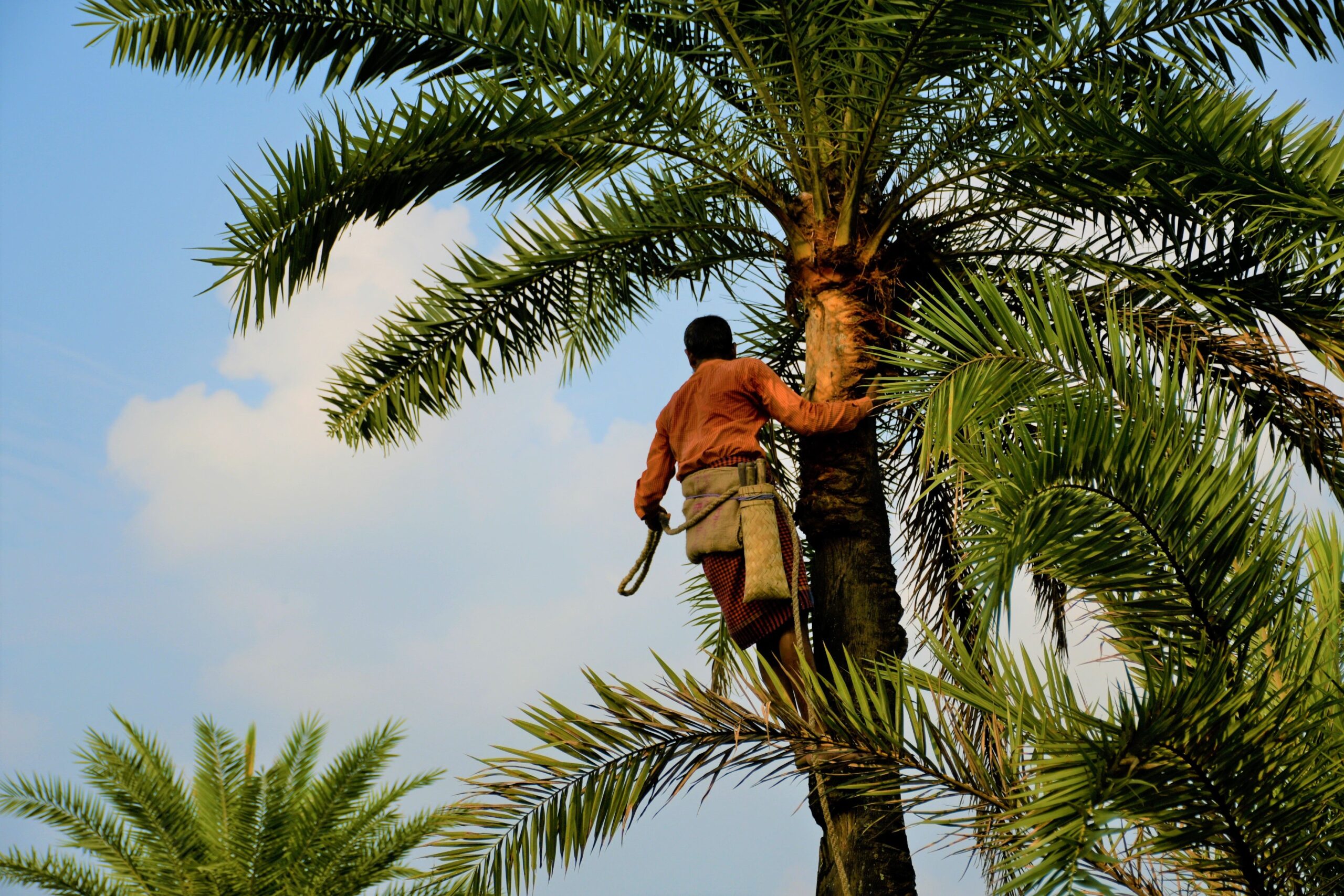
The palm oil industry hires more than 3 million people in Malaysia. This is the number given by both MPOB and MPOC, the two main bodies that track the sector. What’s amazing is that this makes palm oil industry the second-largest employer in the whole country, right after the government itself – which employs millions of public servants. No other single industry comes close to putting this many Malaysians to work.
These 3 million jobs are spread right across the supply chain. It starts in the plantations with the harvesters and estate workers, then moves to the mills and refineries, and stretches all the way to the downstream side — the people working in logistics, machinery, banking, and the sale of processed palm products. On top of that, the industry supports around 500,000 smallholders who run their own small plots of land. All of this means the palm oil sector does more than just earn export dollars for the country. It puts food on the table for millions of families, helps develop rural areas, and gives ordinary Malaysians a steady way to earn a living and contribute to the nation’s economic growth at the same time.
All of this is very good for the economy and for the food security of the world. Palm oil is one of the most widely used agricultural commodities on the planet, showing up in a huge range of products across almost every industry. Its main uses include cooking oil and food products like margarine, baked goods, snacks, chocolate, instant noodles, and cereals; personal care and cosmetics such as soap, shampoo, lotions, and makeup; household and cleaning products like detergents; biodiesel and biofuel for vehicles and power; and animal feed made from the leftover palm kernel cake. In fact, palm oil or its derivatives can be found in up to half of the packaged products sitting on a supermarket shelf.
All this is nice and well, palm oil helps the us sustain our daily lives. The plantation workers who make all these possible are constantly exposed to real dangers and health hazards on the job — the kind that can be debilitating and follow a person for the rest of their life. Out of the 3 million people the industry supports, it is the frontline workers on the ground, who do manual and demanding labour on-estates, who carry the greatest share of that risk, and they fall into two groups.
The first is the on-estate plantation workforce — close to 500,000 workers, of whom around 80% are migrants from countries like Indonesia, Bangladesh, India, and Nepal. These are the people doing the hardest and most hazardous jobs: harvesting heavy fruit bunches, spraying (and inhaling – because let’s be honest, enforcement of strict protocols in Malaysia can be very lax) aggressive chemical pesticides and fertilizer, and collecting fruit, often in remote plantations far from the nearest clinic or hospital.
The second group is the smallholders — roughly 450,000 to 500,000 farmers who work their own small plots of land, and who face many of the same physical dangers with even fewer protections to fall back on. Together, these two groups make up the frontline of the palm oil industry. They are out in the field every single day, doing the dirty, difficult, and demanding work that keeps the whole supply chain running — and in return, they are the most exposed and the most vulnerable to injury and long-term health problems.
An Occupation Among the Most Hazardous in the Country
Agriculture is on the extreme end of hazard exposure. According to reviews of Department of Occupational Safety and Health (DOSH) data, the agricultural sector has consistently ranked as one of the highest-risk industries for occupational accidents in Malaysia, with agricultural workers facing a relatively higher risk of accidents than workers in many other sectors. The hazards are not incidental — the risks of injury and hazards are very real due to the kind of work involved on a daily basis for these labour workers.
Oil palm plantation labour concentrates several categories of risk at once:
Physical injuries. Harvesting involves cutting fruit bunches weighing up to 25 kilograms from heights of several metres using long poles, then transporting them across uneven terrain. Falling bunches, cuts from harvesting sickles, and falls are routine hazards. Musculoskeletal disorders — chronic back, shoulder, and knee problems from repetitive heavy lifting — are among the most common and most disabling long-term conditions in the sector, and disability from these injuries tends to affect agricultural workers more frequently and more severely than in most other industries. These workers are also exposed to long term physical consequences that do not show up immediately. It’s not until after a couple of decades that health problems like arthritis and joint problems show up. By then, these workers have already left the workforce and have to deal with long term health consequences on their own, through private (on their own dime) or public health care (government funds).
Chemical exposure. Workers who handle or apply pesticides and herbicides are vulnerable to acute poisoning, with symptoms ranging from headaches and nausea to respiratory problems. Studies of female oil palm workers employed as herbicide sprayers have documented back strain and hazardous chemical exposure as recurring occupational health problems. Prolonged exposure has been linked to more serious chronic conditions, such as cancer.
Biological hazards. The plantation environment is a known reservoir for leptospirosis, one of the most common occupational infectious diseases in Malaysia, alongside a range of other infections that circulate in estate and forest-edge settings.
Heat and terrain. Open-air work in tropical heat, which as a result of global warming, has become a lot more unbearable even in oil palm estates which are covered by shades. Over long shifts and across difficult ground, compounds every other risk and accelerates fatigue-related accidents.
A systematic review of occupational health in the palm oil industry noted that more than a million workers are employed across the sector globally, yet there remains a striking lack of information on their occupational health and safety — a blind spot that Malaysia, as one of the world’s largest producers, has a particular responsibility to address.
From Injury to Financial Shock
Here is where occupational risk becomes an economic problem for the household. When an estate worker or smallholder is injured or falls seriously ill, two things happen at once: they have no feasible way of earning an income, and health care costs start racking up.
Malaysia’s public healthcare system is heavily subsidised and remains the backbone of care for rural communities. But it is under real strain. Rural and public facilities are frequently understaffed, wait times are long, and specialist care often means travelling significant distances — a genuine obstacle for families in the plantation belts of Sabah, Sarawak, Pahang, and Johor, where the nearest well-equipped hospital may be hours away.
The financial exposure is not hypothetical. Out-of-pocket health spending in Malaysia reached RM22.38 billion in 2022 — roughly 1.64% of GDP — reflecting the reality that many Malaysians are either choosing, or being compelled, to pay directly for care. For a B40 household, a single outpatient visit or emergency admission to a private healthcare institution can easily deplete their savings, and a major treatment can push a family back below the poverty line the industry once helped them escape.
Government schemes exist to soften this. PeKa B40 offers subsidised health screening for the bottom 40% of earners, and MySalam provides limited financial protection. But these programmes have well-documented limits: PeKa B40 has struggled with low uptake and thin follow-up care, and its basic screenings do not meet the full spectrum of real healthcare needs. Meanwhile, less than half of Malaysian workers are covered under any group insurance scheme, leaving a significant protection gap that falls hardest on lower-income groups — precisely the demographic that makes up the plantation workforce.
Why Private Medical Coverage Has Become a Practical Necessity
For estate families and independent smallholders, the gap between what public healthcare schemes cover and what a serious health event actually costs is where financial ruin lives. To illustrate this point, out-of-pocket cost for a simple treatment at a private hospital in Malaysia will now easily cost a few thousand Ringgit. We’ve not been able to find any private hospitals that charge less than RM 1000 for any treatment, regardless how minuscule, that involves ward admission. For plantation workers who earn less than RM 3000 per month, a medical card provides a protection against medical costs that easily rack up into tens of thousands of Ringgit. Access to private healthcare via individual health insurance or Group Hospitalisation and Surgical (GHS) insurance has become a necessity for thousands of plantation workers that work in rural areas and need quick access to quality treatment in case of a medical emergency or injury.
A medical card matters here for reasons specific to the plantation context. It shortens the distance to care by opening access to private panel clinics and hospitals that can be reached faster than an understaffed public facility. It removes the upfront cash barrier through cashless or guaranteed-admission arrangements, so a family is not forced to choose between treatment and rent. And it protects the household’s hard-won economic position — the very rural middle-class status that FELDA, FELCRA, and RISDA schemes were built to create — against the one shock that public subsidies alone cannot fully absorb. For families weighing their options, understanding how an affordable medical card fits alongside existing government schemes is a sensible starting point for closing the gap that occupational risk exposes.
The palm oil industry has come a long way in the modern, post-Covid world. The sector has pushed hard to prove it can be sustainable, mainly through the mandatory MSPO certification scheme, and it continues to work on improving its acceptance in developed markets, including a tough and often sceptical Europe. At home, palm oil has played a huge role in eradicating poverty, employing hundreds of thousands of workers and lifting many rural families into a better standard of living. Across the whole supply chain, an estimated 3 million people are employed, and the government has benefited greatly from the tax revenue this single agricultural commodity generates.
But the plantation workers on the front line face a lot of uncertainty. They suffer a high risk of injury simply because of the nature of the job — the fruit bunches are heavy, weighing up to 25 to 30 kg, and the plantation floor is often uneven. A single slip can cause a sprain or a more serious injury that takes a worker out of the workforce and cuts off their income. And because these manual labourers earn a B40-level income, they are the most vulnerable to financial shocks. One medical emergency can push them well below the poverty line, especially if they have to seek treatment at a private hospital.
A burdensome medical cost caused by an injury or medical emergency can take a worker out of the workforce for months at a time. Shortening the duration for a full recovery can be made possible through high quality private healthcare. The plantation workers who mainly do manual labour on estates can find private hospitals highly intimidating due to the unfamiliarity with the environment and also insanely high medical costs for treatments. As a result, they delay or avoid seeking treatments. This can lead to long term problems that don’t surface until after many years – and by then it could be too late for any medical intervention. An affordable medical coverage on top of a basic, cost effective GHS medical insurance coverage provided by the employers can provide a lot of assurance to the on-estates workforce. This combination basically allows B40 workers access to high quality, prompt medical care without worrying about out-of-pocket costs, which prevents total financial collapse and a whole lot of secondary ripple effects.


